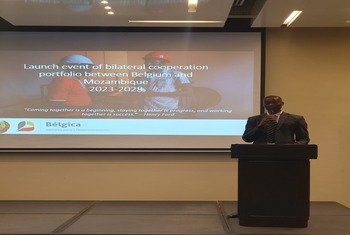


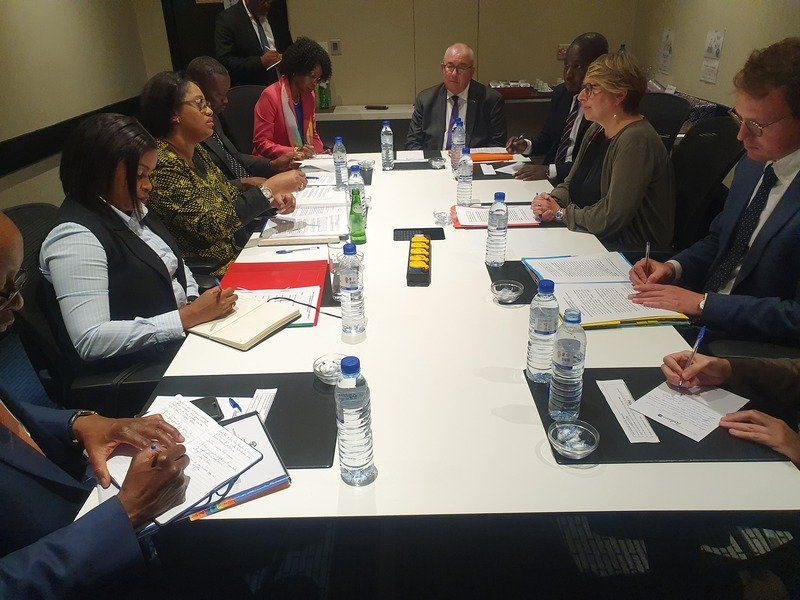
In the margins of the launch of the Bilateral Cooperation Programme 2023-2028 between Mozambique and Belgium, the Vice-Minister for Economic Affairs and Finance, Carla Louveira and Belgian Minister for Cooperation and Head of Delegation, Caroline Gennez, exchanged views on bilateral cooperation between the two countries, with emphasis on the support that the Government of the Kingdom of Belgium has provided in the different areas of cooperation, with emphasis on Public Finance management.
The Bilateral Cooperation Programme, valued at EUR 25 million, focuses on priority areas of the Government's Five-Year Programme (FFP) such as renewable energy, sustainable access to drinking water, waste management and circular economy.
At the meeting, Louveira also highlighted the readiness and involvement of the Belgian Government in the cooperation actions that extend to the areas of Environment, Energy, Health, Agriculture (food and nutrition security), Institutional Training (Fund of Studies and Technical Assistance to the Ministry of Economics and Finance) and Industry and Trade, which allows Belgium to consider as an important partner in the country's development process.
Caroline Gennez pointed out that the Bilateral Cooperation Programme signals the robustness of a continuing partnership in development cooperation between the two countries, which has lasted for more than 20 years. "This specific portfolio has been fully formulated to address climate change and a fair energy transition in the global and Mozambican context", he said.
In his speech, the Deputy National Director of Monitoring and Evaluation, Albano Manjate, shared the institutional and technical framework of the Cooperation Programme between Mozambique and Belgium and referred to the fact that the Programme focuses on climate change. Climate change is a key theme for the development of the country and the Ministry of Economics and Finance (MEF) has the role of coordinating development through the design and implementation of sectoral and territorial policies and strategies, You got it.
For Manjate, climate change is not just an environmental issue, because in recent times it is the main economic problem that all economies have to address, especially climate finance, its impact on public finances and the economy, especially in vulnerable economies such as ours and macroeconomic policies in particular fiscal policy, which can contribute to climate change, by stimulating green investment.
Albano Manjate recognizes the need to mobilise climate finance in a more focused and integrated way, which allows exploring the various sources of funding, in particular innovative sources, such as carbon credits, as well as improving policy-making support, in order to ensure negative impacts and also explore the opportunities brought by internationally adopted climate change mitigation measures, and the FEM has decided to create a Climate Financing Unit.
Work developed by MEF and ENABEL
The MEF through the National Monitoring and Evaluation Directorate, focal point of the Green Climate Fund (GCF), in the framework of the work with the Belgian Development Agency (ENABEL) mobilised 1 million dollars from the Green Fund to strengthen capacity and institutions in the area of climate finance.
The funding was approved last March, before the start of the current Cooperation Programme and the results are a clear advance and indication of the gains it can bring from the point of view of mobilizing more resources to finance the climate action.
The new Cooperation Programme with Belgium highlights potential points of intervention in the area of economics and finance such asclimate debt, carbon emission adjustment mechanism at borders and carbon markets, concluded the Director.